The Nano Carbon Cycle

We live in a world of wee beasties. Microbes here, microbes there, microbes in every breath we take, microbes on every bite we eat. They digest the food in our bellies, they create our food and drink. They make us sick.

The oceans are full of them too.

Prochlorococcus

Meet Prochlorococcus, one of the reasons there is Oxygen in our atmosphere.
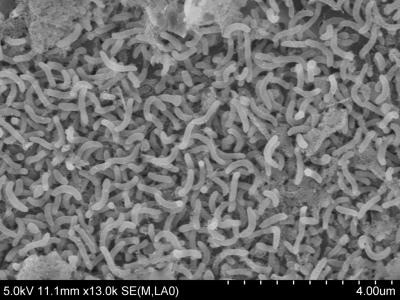
sar11-bacteria

Meet SAR 11, part of the reason (besides us) that there is less Oxygen and more CO2 in the atmosphere.

Wee beasties comprise half of the biomass of the planet. The oceans cover 70% of the surface and in the wee beastie soup at the ocean surface massive amounts of Carbon and Oxygen are cycled between photosynthesizing and respirating beasties without ever leaving the water, and our new friends above are major players. This exchange takes place over distances of microns and nearly instantaneously.

Call it the nano Carbon Cycle.

Update 10-2015

The following from the abstract of Lea-Smith et al 2015:

Prochlorococcus and Synechococcus, produce and accumulate hydrocarbons, predominantly C15 and C17 alkanes, between 0.022 and 0.368% of dry cell weight. Based on global population sizes and turnover rates, we estimate that these species have the capacity to produce 2–540 pg alkanes per mL per day, which translates into a global ocean yield of 308–771 million tons of hydrocarbons annually. We also demonstrate that both obligate and facultative marine hydrocarbon-degrading bacteria can consume cyanobacterial alkanes, which likely prevents these hydrocarbons from accumulating in the environment. Our findings implicate cyanobacteria and hydrocarbon degraders as key players in a notable internal hydrocarbon cycle within the upper ocean, where alkanes are continually produced and subsequently consumed within days. 
Posted in Carbon Cycle, Climate, Geography, Geology, Oceanography | Tagged , | 1 Comment

Reversals and the Carbon Dioxide Wind.

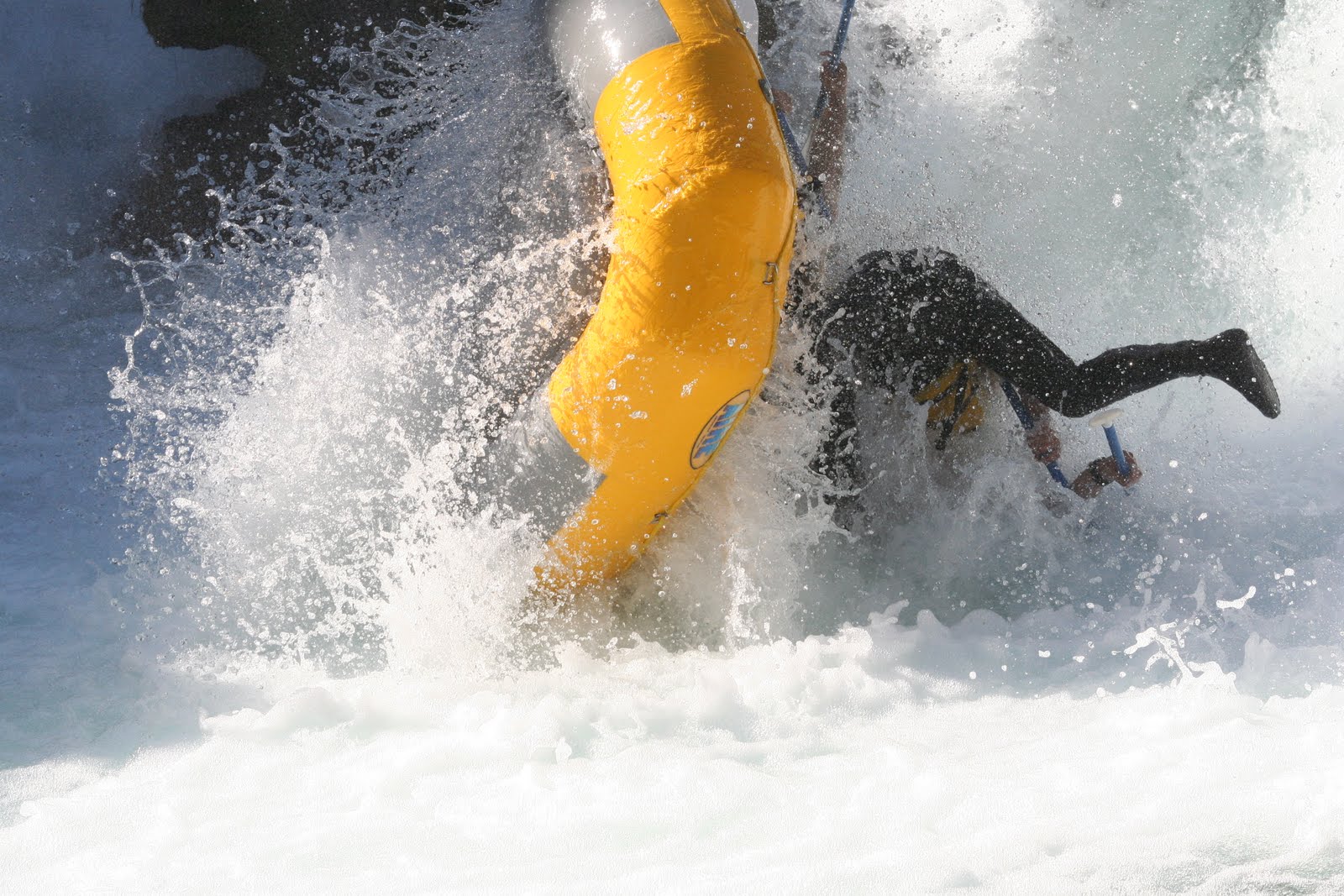
The most astonishing lesson in physics gained from floating rivers is the inclination of water to reverse direction and flow back into a “hole”. Even in the steepest rapid and in spite of its tremendous weight and momentum, when an obstruction (usually rock or ledge) forces a divergence of flow, that stupid water wants to go back upstream and fill the void. Nature abhors a vacuum.

800px-20070331_3424_Lloyd_slowly_flips_in_Indian_Dick

River folks call these features holes or reversals. They are dangerous features that surviving river runners learn to avoid.

WhiteSalmon08-23-2010pm 059

Our planet has a river of Carbon dioxide. We humans produce about 10 gigatons of the stuff each year, but about 200 additional gigatons is outgassed at ocean upwelling zones, and chemically produced by other living things. Of this, about 120 gigatons is used by plants and about 90 gigatons sinks back into the ocean in downwelling zones primarily in the North Atlantic and around Antarctica. All of this in one year.

Well, these downwelling zones where 90 gigatons of Carbon dioxide sink are holes in the Carbon dioxide river, and a surely as water will flow uphill to fill a void, Carbon dioxide will flow to fill these holes.

We usually call rivers in the atmosphere wind. Carbon dioxide wind.

Posted in Climate, Geography, Oceanography, River | Tagged , , , | Leave a comment

Study in Science Magazine Shows Strongest El Ninos in 7000 Years Were During Little Ice Age

Kim Cobb and others published January 3 in Science Magazine a paper exploring 18Oxygen in coral cores as old as 7000 years. Living coral was not drilled. While showing some increase in amplitude since 1970, the strongest El Ninos in the 7000 year span occurred about 400 years ago during the Little Ice Age.

8368309686_5073cc43fe

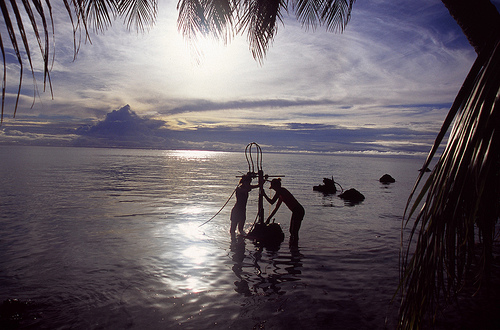
Here in a picture from UCSD they are drilling in Coral “rocks” that have been broken off the reefs. Besides the strongest El Ninos and the Little Ice age, the early 1600’s were   characterized by sporadic outbreaks of plague, the heyday of Sir Isaac Newton, the English Civil War, and the sailing of the Mayflower.

Posted in Climate, Climate Change, History, Paleoclimate | Leave a comment

Structural Similarities Observed in ENSO Neutered Atmospheric Temperatures and Ocean Enthalpy

earth

earth (Photo credit: Dreaming in the deep south)

Signal lies in structure.

Atmospheric temperature for the last decade and a half has made it abundantly clear that there is much more going on than the optical and radiative properties of carbon dioxide. The converse possibility that oceans, which have thus far continued to warm, could somehow be warmed by CO2 in spite of the thermal stability and theoretically limiting absorptive properties of water has remained a possibility.

The ancients had earth, air, fire, and water for fundamental elements and we have simplified these elements to mass, energy, and time. Energy is a mystical element. It dances as a plasma off the welder’s rod and in flares from the sun, and it bathes us in pleasant light and warmth.

The earth receives some quantum of energy from the sun, yet as best we can measure it several percent more energy dances between the surface and the lower atmosphere than the total the earth recieves.This dance takes place in the infrared part of the spectrum and the inherent lower energy compared with incoming visible light makes the magnitude of this flux all the more impressive.

The dance floor is a micron scale skin on soil, rock, ice, and water that can receive infrared and be warmed and the action is water vapor and to a far lesser extent Carbon dioxide absorbing the radiation from the warmed surface skin and radiating it back. If the incoming solar radiation were a 100w bulb, 117 watts would be radiated as IR from the surface skin to the atmosphere and 100 watts of that radiated back to the surface.

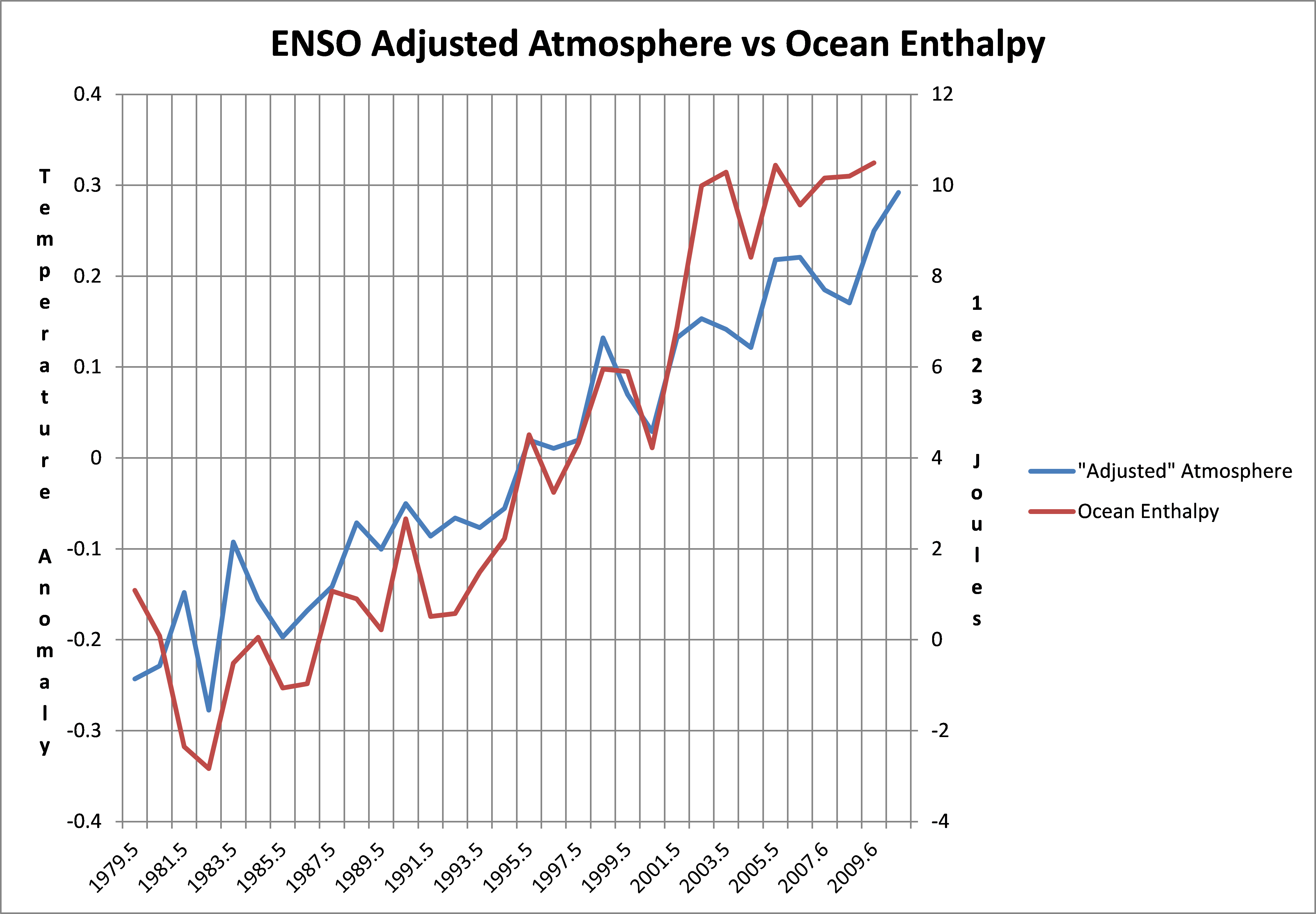
I have argued that it makes no sense to subtract ENSO from atmospheric temperature because it is not noise but rather a fundamental part of the system. Here I digitized an ENSO neutered average of atmospheric temperature measurements from Foster and Ramshorf 2011 and plotted them against NODC all ocean Enthalpy which is basically Levitus et al 2012.

ENSO Adjusted

Oceans cover 70% of the planet and the atmosphere receives about 80% of its “temperature” from surface radiation. I expected that this plot would show that the residual atmospheric warming after ENSO (and the other stuff like volcanoes that probably  should be considered noise) is subtracted out is the baseline  atmospheric warming to be expected from ocean warming.

The result is not so clear. There is similarity of structure but overall it is not what one expects from the massive, instantaneous, reciprocal energy flux alone.

Posted in Climate, Climate Change, Geography, Geology, Global Warming, Oceanography | Tagged , , , | Leave a comment

Loose Fire Hose and the Aborted Nino

The Antarctic vortex is a whirling dervish that extends from the stratosphere to the deep ocean. Inside the steep gradients that drive this circulation everything is reflected inward and contained. Outside the dervish everything that contacts it receives angular momentum. Thus works a centrifugal pump.

All Ocean view by Alexandre Van de Sande

All Ocean view by Alexandre Van de Sande

One very important feature of our planet that gets accelerated by the Antarctic pump is the thermohaline circulation. Here it is drawn with a linear acceleration into the Pacific and then doubling back in a helical figure 8 to reinforce the surface warm water pile up at Indonesia (the Pacific Warm Pool) that sets the stage for an El Nino. I would draw it looping further into the north Pacific. The water would rise and warm in South China Sea and  reinforce the Kuroshio Current. This is the PDO “positive” phase. Positive in the sense that it reinforces El Ninos. Cool water is pumped to the South China Sea where it reduces evaporation and rainfall in China. El Ninos are more frequent because the warm water surface flow reinforces the efforts of the trade winds to pile warm water at the restriction of Indonesia.

But like the loose end of a fire hose this thermohaline configuration is unstable. We got Rossby waves, we got Kelvin waves, we got maybe waves we can’t imagine bouncing around the ocean basins. Bouncing off continents, bouncing off midocean ridges, running up and down the continental margins, even pumping surges of water through sieves like Indonesia and the Bearing straight.

And then we get a sleeper wave, a resonance of all these waves so strong tha it unwinds the helix and the firehose flops to the other side of the Pacific. Now the thermohaline circulation reinforces the Humboldt Current. The Southern Hemisphere trade winds are strengthened.  Cold upwelling cools the eastward surges of warm water that would be El Ninos as the Northern Hemisphere trades move more to the central Pacific. And the male children are aborted.

The last sleeper wave was in 1997 and the most recent abortion was this very year.

Posted in Climate, Climate Change, Geography, Oceanography | Tagged , , , , , | Leave a comment

Global Average Temperature and Whirled Peas

Can you visualize whirled peas? Yes, unfortunately. And what do whirled peas mean? Both the mean and the average and everything else.. Everything is nothing.

whirled-peas[1]

So what if the diurnal temperature spread were the difference between a snowcone and a snowfree earth (there has never been a snowball earth)? What if it were the diurnal spread plus the  45 degree N atmospheric moisture? Can we really explain the truly wimpy Southern hemisphere glaciation at the LGM by a lack of continents? A mile of ice on Manitoba, Patagonia merely Sierraesque, and Siberia unscathed?

Where would we find these answers in the whirled peas anyway? Maybe we just have whirling disease.

Posted in Climate, Climate Change, Geography, Global Warming | Tagged , , , | Leave a comment

Adventure and Science

What exactly is the distinction between play and work? The things some people do for recreation would seem like bloody hard work to others.I’ve spent a good part of my life climbing mountains and rafting rivers, and a good part of my life learning science, but I’ve never made much money at these. More practical work has served very well that I may enjoy adventure and science, but for me adventure and science are the same.

How can a climber not be at some level a geologist? How can a rafter not be a hydrologist?

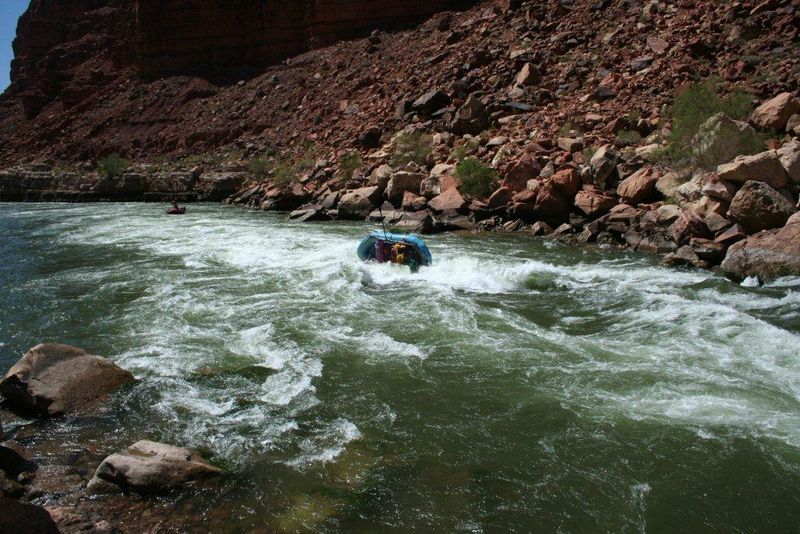
Lava

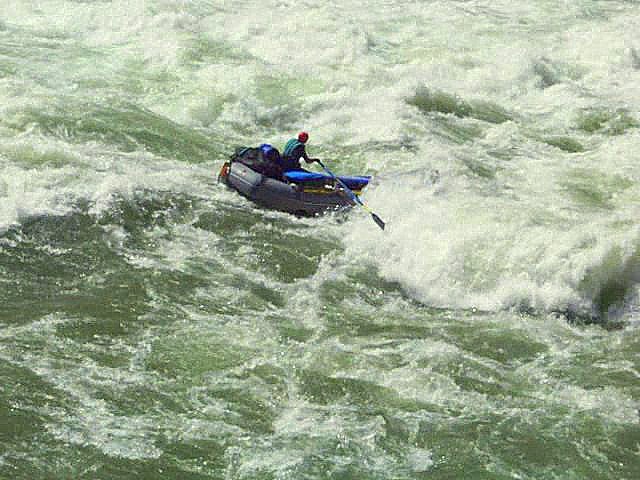
Here I’m bouncing off a reaction wave in an unconventional entrance to Lava Falls on the Colorado River in the Grand Canyon. The more developed part of the cyclical wave where my oar is would flip the boat if encountered broadside. Beyond and out of view is the famed V wave one must hit straight and at the point.

Well, I hit the reaction wave hard and as I’d hoped it bounced me into good position for the V wave. The loss of momentum cost me some style points further down as I got spun, but when you get to the bottom of Lava right side up you’ve had a good run.

I believe that emergent properties insure that life will never be reduced to chemistry, and I suspect that similar properties will prevent the fluid dynamics of Lava Falls from being mathematically modelled in my lifetime.

So study all the math you can, but to really understand water you must float a river.

Posted in River | Tagged , , | Leave a comment

Carbon and Freight Trains

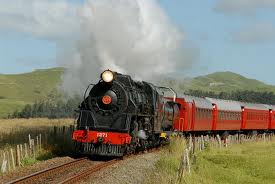
Everyone seems to think that carbon dioxide goes into the atmosphere and sort of sits there like some invisible smoke, trapping outgoing IR like our automobile windshields and heating us up. Carbon dioxide is more like a freight train. Humans currently pump nearly 10 gigatons, the weight of 10 cubic kilometers of distilled water, of CO2 into the atmosphere each year. That sound like a lot right? It is a lot.

freight train

But the Oceans cycle 90gt of biological and mineral CO2 with the atmosphere and mostly biological processes on land 120gt more each year. So for all our might, we are contributing less than 5%  to a natural cycle that has existed since plants colonized land nearly 400 million years ago.

Carbon dioxide has an almost magical affinity for water. Leave distilled water out and it will equalize with ambient CO2 in hours. This may have something to do with Carbon being the element of life. But it surely has something to do with the freight train of Carbon cycling between the earth’s surface and the atmosphere each year.

Posted in Climate, Climate Change, Geography, Oceanography | Tagged , , | 2 Comments

Ring Around Antarctica

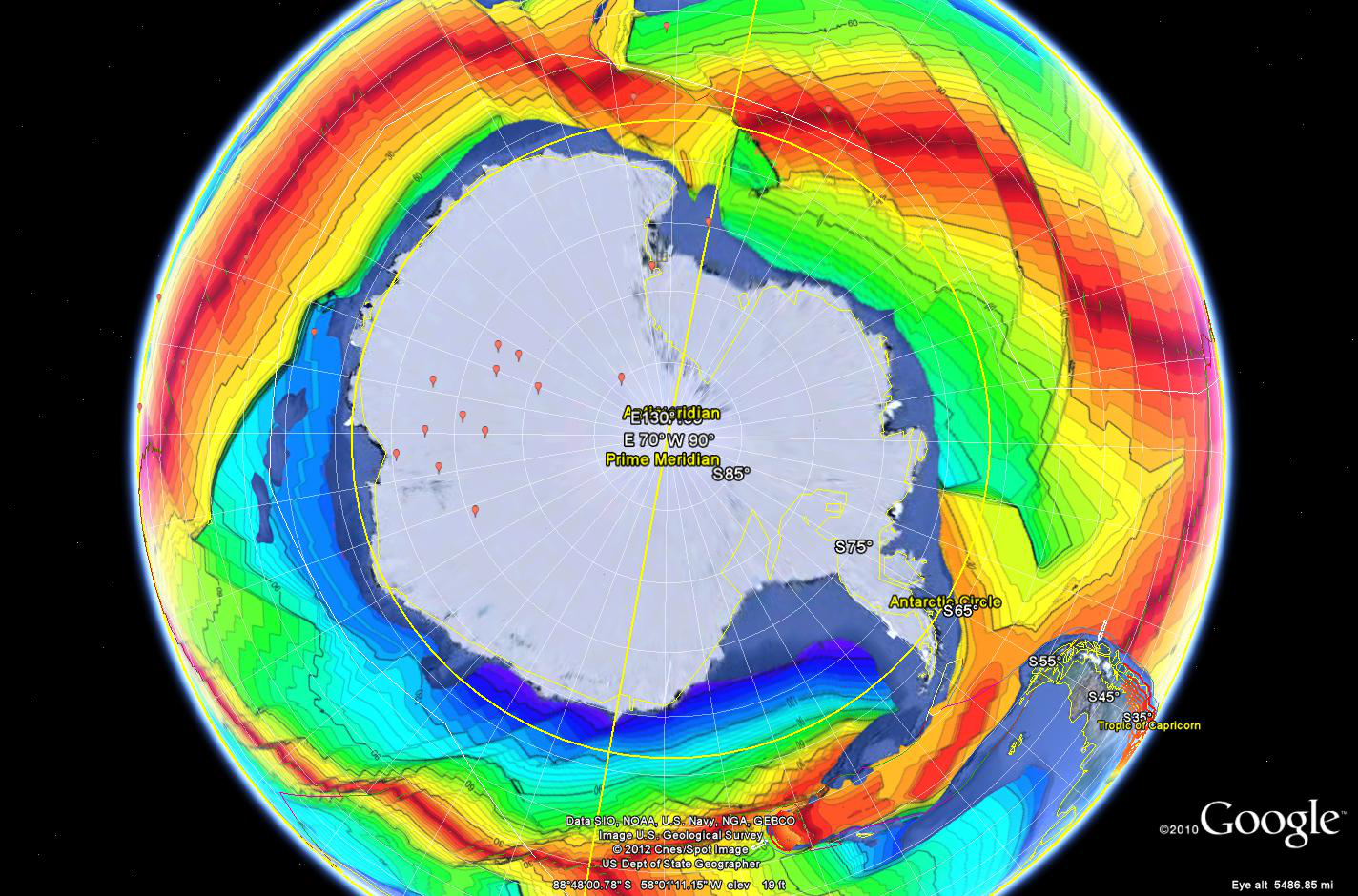
There are lots of rings around Antarctica. Sailors know the circum-Antarctic winds as the fearsome fifties, the screaming sixties, etc. These winds are not impeded by any land and they drive the circum-Antarctic currents in the Southern Ocean. The surface currents drive the deep currents in turn and the net result is a whirling dervish from the stratosphere to the abyssal ocean spinning around Antarctica. The Antarctic deep current is a centrifugal pump that actively moves the thermohaline circulation.

But let’s talk about another ring around Antarctica, one that is silent to us and geologically slow:

Ring Around Antarctica

Antarctica is completely circumscribed by spreading centers or “ridges”. A roughly similar configuration must have existed for most of the tectonic history we know from apparent polar wander paths, because there has almost always been a continent at the South Pole.

But that is a future post. What is ridiculous about this configuration is there are no trenches. The way this usually works is a continent or supercontinent gets rifted apart by a spreading ridge with new ocean floor that is “welded” to the continent. the weld prevails in the shoving match and the opposite side of the continent breaks from the ocean floor and slides over it forming a trench where that ocean floor is forced down and presumably back to the mantle. This process is clear where the Atlantic has separated Pangea and major trench systems have formed along the Pacific coasts of the Americas and Eurasia.

As you can see Antarctica is being pushed from all sides but nothing seems to be giving. The isochrons seem symmetrical about the ridges so it is not like they are dogging it on the Antarctic side and pushing mostly north.

So either the ridges continually emerge around the South Pole and move north like smoke rings or the raving lunatics who maintain that the earth has been growing are right.

Posted in Geography, Paleogeography, Plate Tectonics, True Polar Wander | Tagged , , , , , , , | 4 Comments

Seafloor Isochrons Place a Hard Limit on Crustal Disintegration from the Chicxulub Impact

I always thought the entire form of the Gulf of Mexico might be the crater from the Chicxulub impact reputed to have wasted the dinosaurs. My imagination runs with that name. So much to work with. Chicxyclub…well, Club Med impact just rolls off the tongue a lot better.

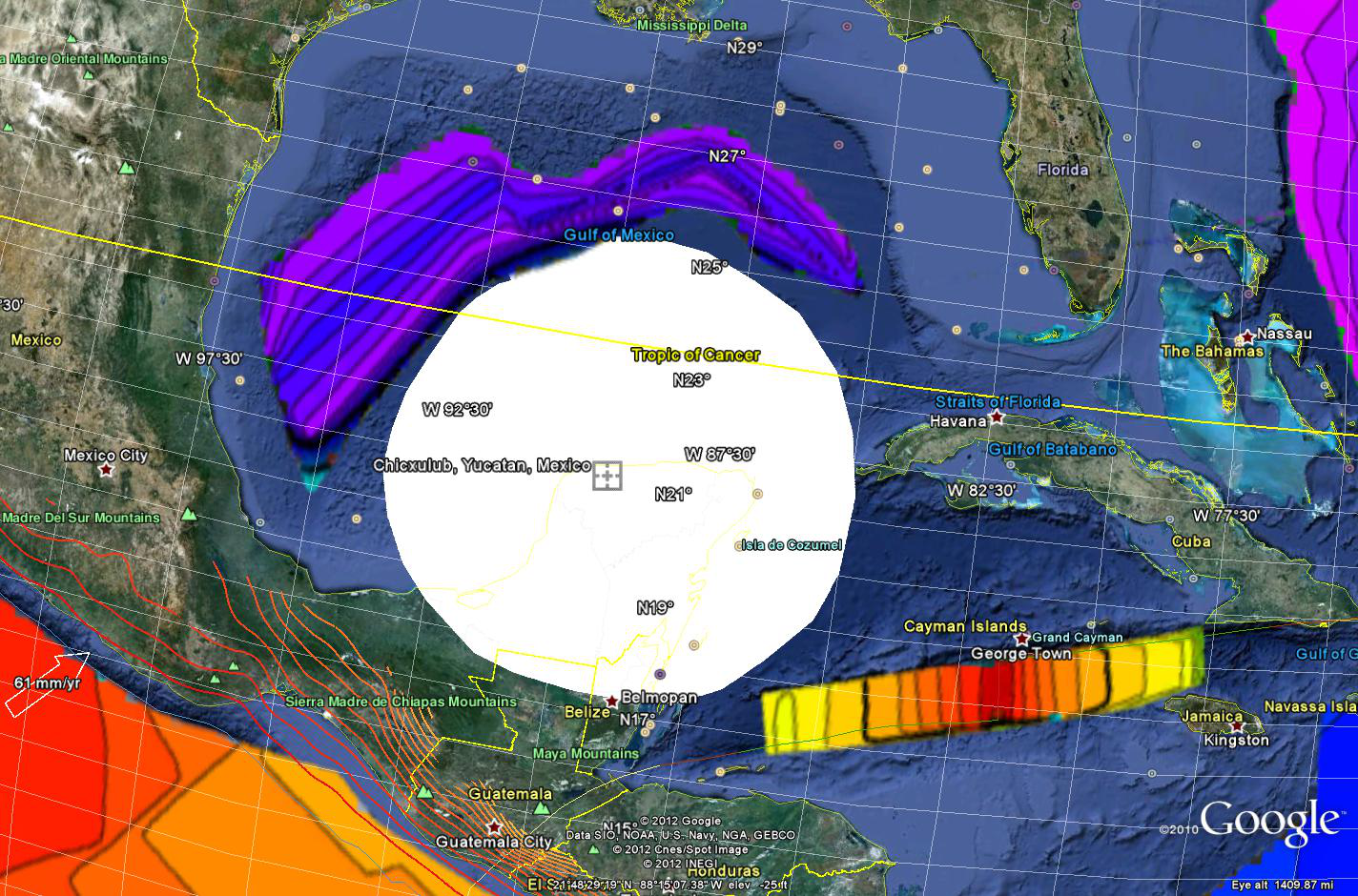
Chicxulub

My notion was wrong because there are magnetically imprinted isochrons dating back to 165 mya in the middle of the Gulf of Mexico that were not destroyed or overprinted by the impact.  These chrons are a hundred million years older than the impact. So here is the best circle I can manage using Google Earth’s Polygon Tool centered on Chicxulub. It seems odd that ground zero should be on land, but it is. Shouldn’t there be some kind of big hole here?

The circle doesn’t fit very well. Maybe the real ground zero is further south and the circle bigger.

Posted in Asteroid Impacts, Geography, Geology, Magnetic Reversals, Oceanography, Plate Tectonics | Tagged , , , | 1 Comment