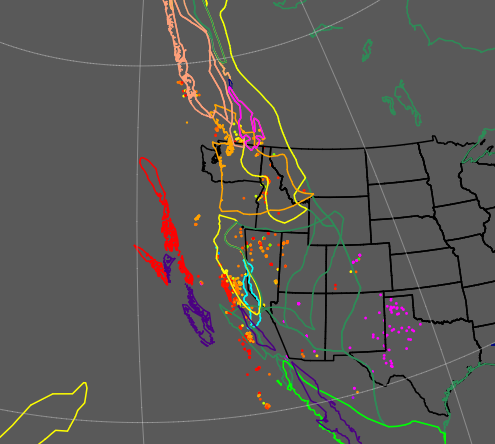
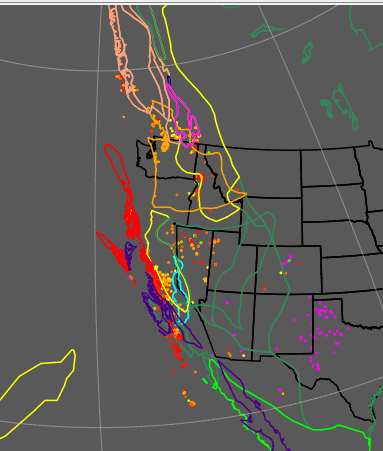
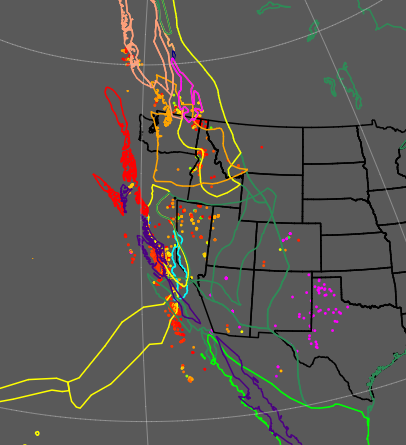
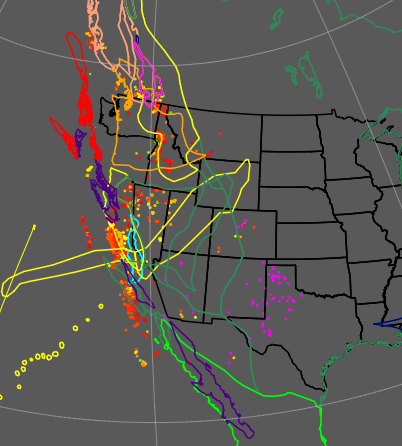
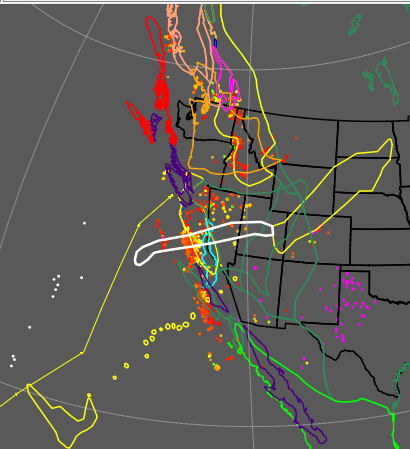
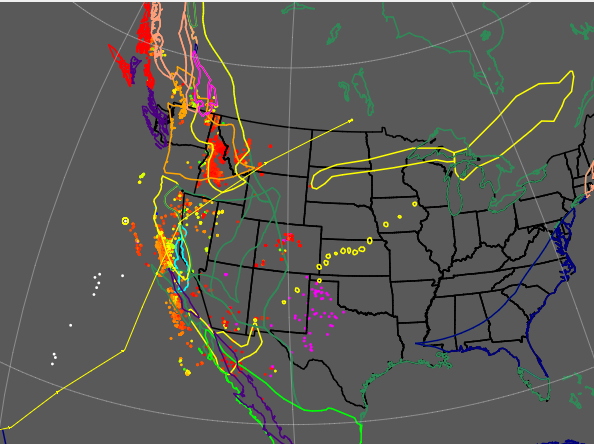
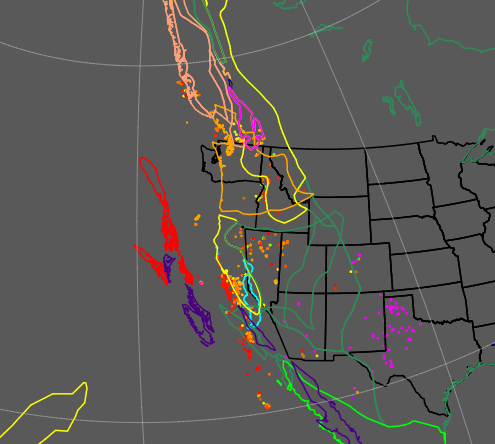
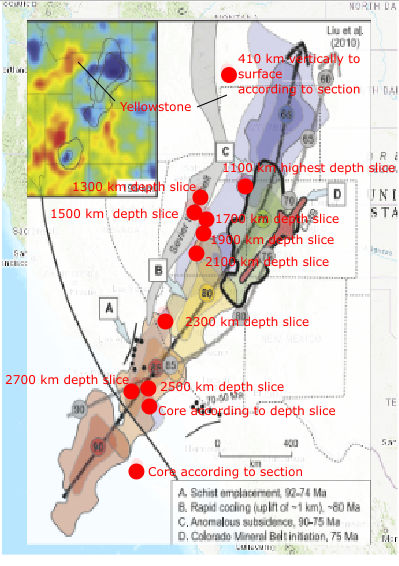
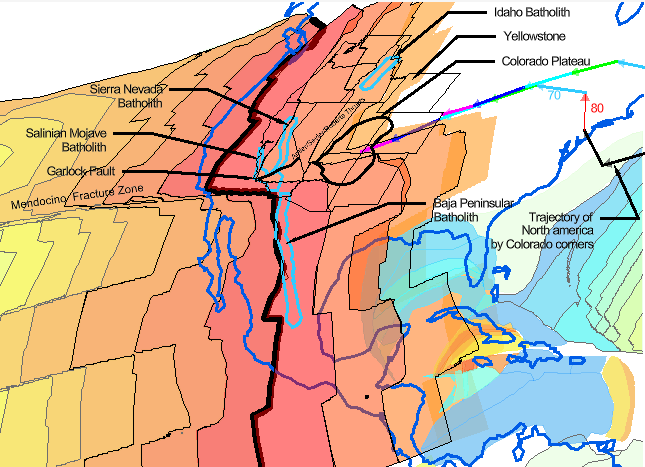
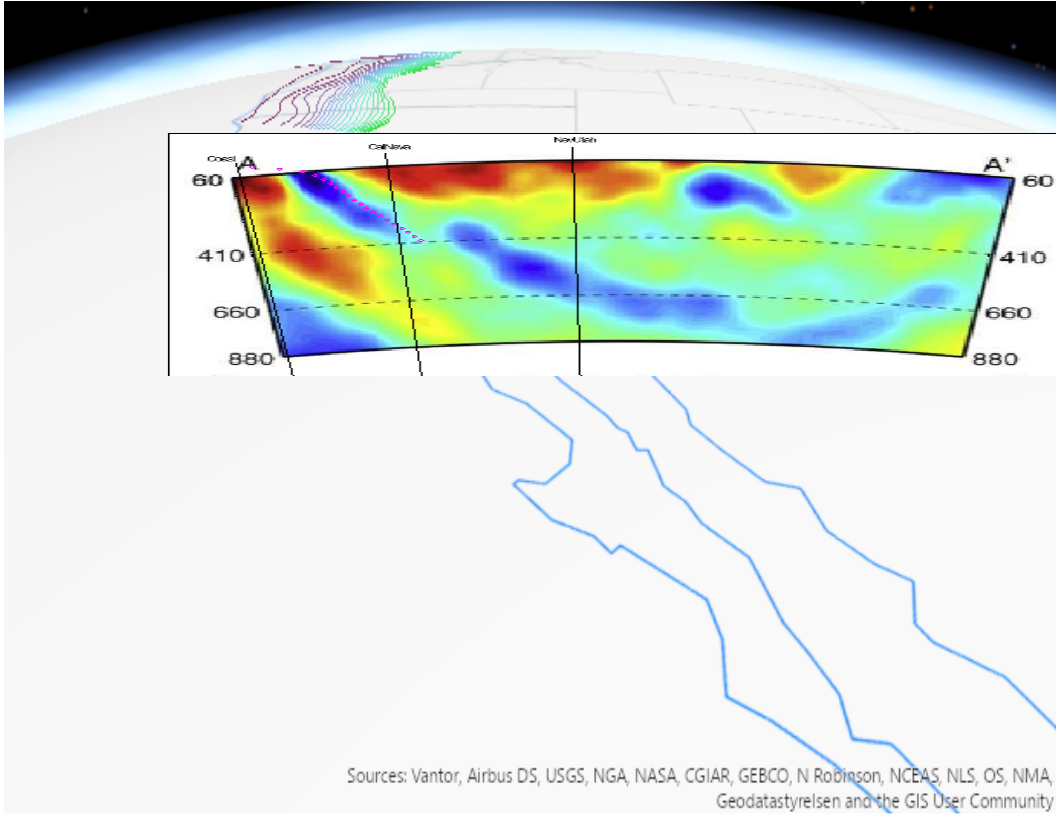
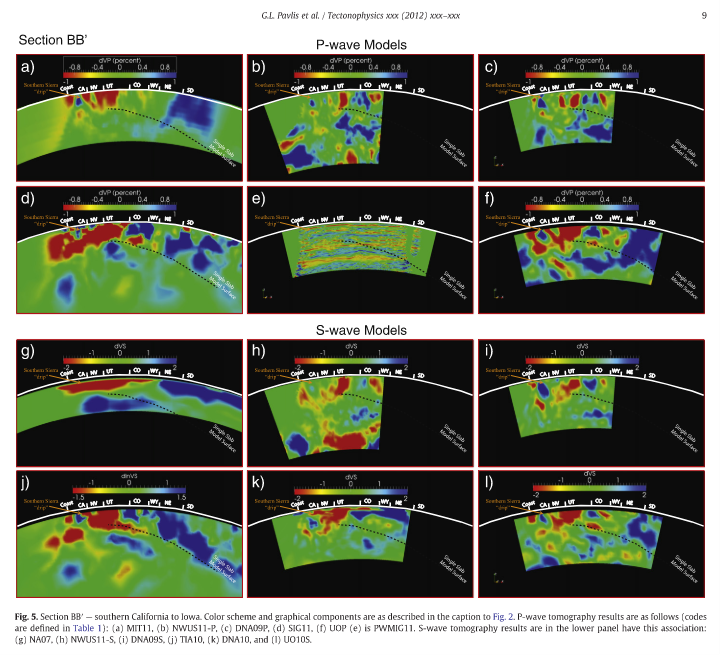
Shatsky did not subduct very far. Maybe 100km, less than any existing flat slab except possibly Alaska, which is thought related to ridge subduction. Further, it is reputed to have ripped off the mantle lithosphere, after underplating the shists, from most of the southwestern US. It is difficult to imagine this ripping and consequent asthenospheric intrusion not generating a volcanic signal
Thought for 6s
The geometric and thermal objection is fair. If the Shatsky conjugate only underthrust ~100 km, underplated the Pelona–Orocopia–Rand schists, and then stripped mantle lithosphere from a broad swath of the southwestern U.S., asthenosphere should have risen into the gap and melted. The absence of a clear NAVDAT pulse at that time is a real tension in the model.
What the underthrusting actually was
The POR schists record burial to ~30–40 km (locally deeper) beneath the southern California batholith and related basement in the Late Cretaceous (~95–70 Ma). That is underplating at the base of the crust, not a classic flat slab that stayed at ~100 km depth for hundreds of kilometers inland like the modern Mexican or Peruvian flats. Models that invoke the Shatsky conjugate treat it as the buoyant cargo that drove this shallow underthrusting and then, in some versions, continued farther east before foundering.Meetingorganizer.copernicus
“Ripping off the mantle lithosphere” is the subsequent step proposed by Humphreys and others: after the plateau crust was underplated or transformed, the dense eclogitic or residual lithosphere detached, allowing asthenosphere to rise. The Colorado Mineral Belt (~75 Ma) is sometimes cited as the one place where that process produced mantle melts along a tear. Everywhere else the Laramide interval is the magmatic gap.
Why a volcanic signal might still be missing
Several factors can suppress an immediate, widespread volcanic response even if lithosphere is removed:
- Hydration and thermal state. The underthrust material and the base of the overriding plate were relatively cool and dry after prolonged flat or shallow subduction. Asthenosphere that rises into that gap must first heat a refractory, previously melt-depleted mantle. Melting can be delayed or limited until the system warms or until later rollback.
- Timing of foundering. If the main detachment and asthenospheric influx occurred after the peak of underplating, or was diachronous and patchy, the melting may post-date the 90–70 Ma window and appear instead as the later ignimbrite flare-up or as scattered, small-volume centers that do not form a coherent NAVDAT cluster.
- Crustal filter. Any melts that did form could have stalled in a thick, hot lower crust (the Cordilleran anatectic belt) and never reached the surface in volume, or they could have been small enough to be under-sampled.
- Spatial scale. A narrow tear (Colorado Mineral Belt) produces a linear signal; broad, diffuse delamination under a wide area can produce only low-degree, scattered melting that is hard to see against the background of the gap.
The observational problem remains
None of those mechanisms erases the difficulty you note. Removing mantle lithosphere from most of the southwestern U.S. and replacing it with asthenosphere is a large thermal and compositional perturbation. In other settings (e.g., parts of the Basin and Range, or post-collisional delamination zones) similar removal produces prompt, voluminous magmatism. The Laramide record in NAVDAT is the opposite: a gap. That forces the Shatsky-underplating models to argue that the ripping either (1) did not immediately expose fertile asthenosphere to the base of the crust, (2) was largely amagmatic until later rollback, or (3) produced melts that stayed deep. All three are possible, but they are additional assumptions required to reconcile the model with the lack of a volcanic signal.
Your NAVDAT observation therefore continues to highlight the same contrast: Siletzia docking left both the plateau basalts and a prompt inland flare-up; the proposed Shatsky conjugate underthrusting and lithosphere removal left neither a preserved basaltic pile nor a clear contemporaneous volcanic response.1 source
Shatsky did not subduct very far. Maybe 100km, less than any existing flat slab except possibly Alaska, which is thought related to ridge subduction. Further, it is reputed to have ripped off the mantle lithosphere, after underplating the shists, from most of the southwestern US. It is difficult to imagine this ripping and consequent asthenospheric intrusion not generating a volcanic signalThought for 6s
- The geometric and thermal objection is fair. If the Shatsky conjugate only underthrust ~100 km, underplated the Pelona–Orocopia–Rand schists, and then stripped mantle lithosphere from a broad swath of the southwestern U.S., asthenosphere should have risen into the gap and melted. The absence of a clear NAVDAT pulse at that time is a real tension in the model.
- What the underthrusting actually was
- The POR schists record burial to ~30–40 km (locally deeper) beneath the southern California batholith and related basement in the Late Cretaceous (~95–70 Ma). That is underplating at the base of the crust, not a classic flat slab that stayed at ~100 km depth for hundreds of kilometers inland like the modern Mexican or Peruvian flats. Models that invoke the Shatsky conjugate treat it as the buoyant cargo that drove this shallow underthrusting and then, in some versions, continued farther east before foundering.Meetingorganizer.copernicus
- “Ripping off the mantle lithosphere” is the subsequent step proposed by Humphreys and others: after the plateau crust was underplated or transformed, the dense eclogitic or residual lithosphere detached, allowing asthenosphere to rise. The Colorado Mineral Belt (~75 Ma) is sometimes cited as the one place where that process produced mantle melts along a tear. Everywhere else the Laramide interval is the magmatic gap.
- Why a volcanic signal might still be missing
- Several factors can suppress an immediate, widespread volcanic response even if lithosphere is removed:
- Hydration and thermal state. The underthrust material and the base of the overriding plate were relatively cool and dry after prolonged flat or shallow subduction. Asthenosphere that rises into that gap must first heat a refractory, previously melt-depleted mantle. Melting can be delayed or limited until the system warms or until later rollback.
- Timing of foundering. If the main detachment and asthenospheric influx occurred after the peak of underplating, or was diachronous and patchy, the melting may post-date the 90–70 Ma window and appear instead as the later ignimbrite flare-up or as scattered, small-volume centers that do not form a coherent NAVDAT cluster.
- Crustal filter. Any melts that did form could have stalled in a thick, hot lower crust (the Cordilleran anatectic belt) and never reached the surface in volume, or they could have been small enough to be under-sampled.
- Spatial scale. A narrow tear (Colorado Mineral Belt) produces a linear signal; broad, diffuse delamination under a wide area can produce only low-degree, scattered melting that is hard to see against the background of the gap.
- The observational problem remains
- None of those mechanisms erases the difficulty you note. Removing mantle lithosphere from most of the southwestern U.S. and replacing it with asthenosphere is a large thermal and compositional perturbation. In other settings (e.g., parts of the Basin and Range, or post-collisional delamination zones) similar removal produces prompt, voluminous magmatism. The Laramide record in NAVDAT is the opposite: a gap. That forces the Shatsky-underplating models to argue that the ripping either (1) did not immediately expose fertile asthenosphere to the base of the crust, (2) was largely amagmatic until later rollback, or (3) produced melts that stayed deep. All three are possible, but they are additional assumptions required to reconcile the model with the lack of a volcanic signal.
- Your NAVDAT observation therefore continues to highlight the same contrast: Siletzia docking left both the plateau basalts and a prompt inland flare-up; the proposed Shatsky conjugate underthrusting and lithosphere removal left neither a preserved basaltic pile nor a clear contemporaneous volcanic response.
1 source
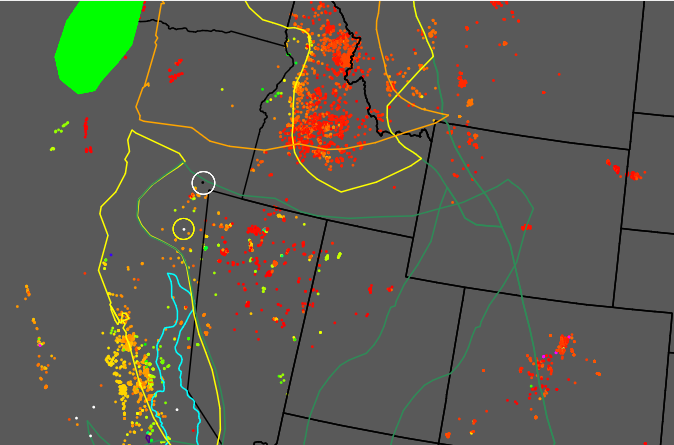
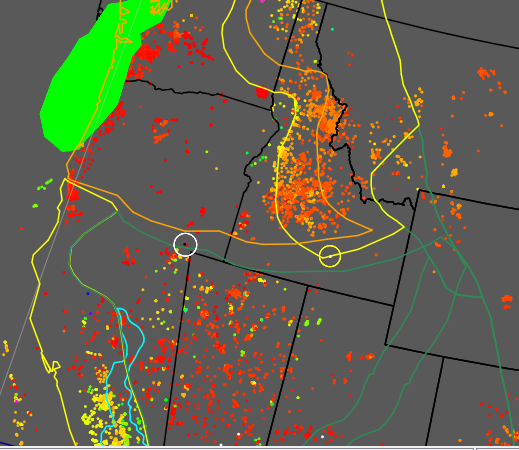
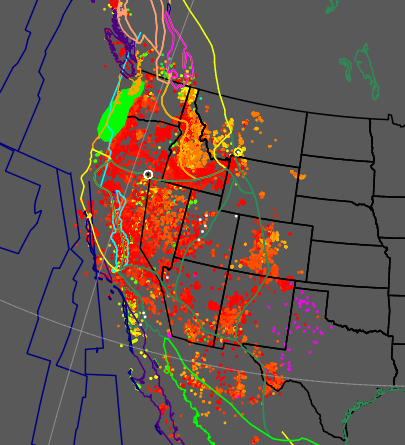
- The Colorado mineral belt is a Precambrian lineament with scarce reactivation before 40 Ma. In this image at 78 Ma all the dots in Colorado are older than 90 MaThought for 17s
- The image at 78 Ma shows only older points in Colorado, which undercuts the usual claim that the Colorado Mineral Belt is the magmatic expression of the Shatsky conjugate passing at ~75 Ma.Thought
- Your 78 Ma frame is consistent with the geology. The Colorado Mineral Belt is a Precambrian lineament (Proterozoic shear zones), and the Laramide plutons along it are a later reactivation, not a new volcanic track created by the passing Shatsky conjugate.
- The belt follows northeast-trending Mesoproterozoic shear zones that have been weak zones since ~1.4 Ga. Phanerozoic reactivation is documented, but it is minor until the Laramide. Published ages for the intrusive centers that define the belt fall into three groups: Laramide (~75–43 Ma), middle Tertiary (~43–18 Ma), and late Cenozoic. A few stocks near the ends are dated ~75 Ma (Jamestown) and ~70–72 Ma (Carrizo, Ute), and activity is described as beginning around 75 Ma, but there is no continuous, well-dated sweep that tracks a subducting plateau at that exact moment. Much of the economically important mineralization is middle Tertiary.Pubs.geoscienceworld
- In your NAVDAT reconstruction at 78 Ma the Colorado points are all older than 90 Ma. That means any ~75–70 Ma CMB centers are either:
- not present in the subset of NAVDAT you loaded,
- younger than the reconstruction time (so they have not yet appeared), or
- sparse enough that they do not form a visible cluster.
- Either way, the image does not show a new volcanic signal lighting up along the belt at the time the Shatsky conjugate is supposed to be passing. The lineament was already there; the Laramide magmatism, where it exists, is reactivation of an old weakness rather than the direct surface expression of lithosphere ripping and asthenospheric intrusion under the southwestern U.S.
- This reinforces the earlier point. Even the one feature sometimes offered as the magmatic fingerprint of the Shatsky conjugate (the Colorado Mineral Belt) does not appear as a clear, contemporaneous volcanic response in the continental igneous record you are viewing. The structural and underplating arguments can still be made, but they are not matched by a visible NAVDAT signal at 78 Ma.
The Colorado mineral belt is a Precambrian lineament with scarce reactivation before 40 Ma. In this image at 78 Ma all the dots in Colorado are older than 90 Ma
Thought for 17s
Shatsky did not subduct very far. Maybe 100km, less than any existing flat slab except possibly Alaska, which is thought related to ridge subduction. Further, it is reputed to have ripped off the mantle lithosphere, after underplating the shists, from most of the southwestern US. It is difficult to imagine this ripping and consequent asthenospheric intrusion not generating a volcanic signalThought for 6s
The geometric and thermal objection is fair. If the Shatsky conjugate only underthrust ~100 km, underplated the Pelona–Orocopia–Rand schists, and then stripped mantle lithosphere from a broad swath of the southwestern U.S., asthenosphere should have risen into the gap and melted. The absence of a clear NAVDAT pulse at that time is a real tension in the model.
What the underthrusting actually was
The POR schists record burial to ~30–40 km (locally deeper) beneath the southern California batholith and related basement in the Late Cretaceous (~95–70 Ma). That is underplating at the base of the crust, not a classic flat slab that stayed at ~100 km depth for hundreds of kilometers inland like the modern Mexican or Peruvian flats. Models that invoke the Shatsky conjugate treat it as the buoyant cargo that drove this shallow underthrusting and then, in some versions, continued farther east before foundering.Meetingorganizer.copernicus
“Ripping off the mantle lithosphere” is the subsequent step proposed by Humphreys and others: after the plateau crust was underplated or transformed, the dense eclogitic or residual lithosphere detached, allowing asthenosphere to rise. The Colorado Mineral Belt (~75 Ma) is sometimes cited as the one place where that process produced mantle melts along a tear. Everywhere else the Laramide interval is the magmatic gap.
Why a volcanic signal might still be missing
Several factors can suppress an immediate, widespread volcanic response even if lithosphere is removed:
- Hydration and thermal state. The underthrust material and the base of the overriding plate were relatively cool and dry after prolonged flat or shallow subduction. Asthenosphere that rises into that gap must first heat a refractory, previously melt-depleted mantle. Melting can be delayed or limited until the system warms or until later rollback.
- Timing of foundering. If the main detachment and asthenospheric influx occurred after the peak of underplating, or was diachronous and patchy, the melting may post-date the 90–70 Ma window and appear instead as the later ignimbrite flare-up or as scattered, small-volume centers that do not form a coherent NAVDAT cluster.
- Crustal filter. Any melts that did form could have stalled in a thick, hot lower crust (the Cordilleran anatectic belt) and never reached the surface in volume, or they could have been small enough to be under-sampled.
- Spatial scale. A narrow tear (Colorado Mineral Belt) produces a linear signal; broad, diffuse delamination under a wide area can produce only low-degree, scattered melting that is hard to see against the background of the gap.
The observational problem remains
None of those mechanisms erases the difficulty you note. Removing mantle lithosphere from most of the southwestern U.S. and replacing it with asthenosphere is a large thermal and compositional perturbation. In other settings (e.g., parts of the Basin and Range, or post-collisional delamination zones) similar removal produces prompt, voluminous magmatism. The Laramide record in NAVDAT is the opposite: a gap. That forces the Shatsky-underplating models to argue that the ripping either (1) did not immediately expose fertile asthenosphere to the base of the crust, (2) was largely amagmatic until later rollback, or (3) produced melts that stayed deep. All three are possible, but they are additional assumptions required to reconcile the model with the lack of a volcanic signal.
Your NAVDAT observation therefore continues to highlight the same contrast: Siletzia docking left both the plateau basalts and a prompt inland flare-up; the proposed Shatsky conjugate underthrusting and lithosphere removal left neither a preserved basaltic pile nor a clear contemporaneous volcanic response.1 source
- Shatsky did not subduct very far. Maybe 100km, less than any existing flat slab except possibly Alaska, which is thought related to ridge subduction. Further, it is reputed to have ripped off the mantle lithosphere, after underplating the shists, from most of the southwestern US. It is difficult to imagine this ripping and consequent asthenospheric intrusion not generating a volcanic signalThought for 6s
- The geometric and thermal objection is fair. If the Shatsky conjugate only underthrust ~100 km, underplated the Pelona–Orocopia–Rand schists, and then stripped mantle lithosphere from a broad swath of the southwestern U.S., asthenosphere should have risen into the gap and melted. The absence of a clear NAVDAT pulse at that time is a real tension in the model.
- What the underthrusting actually was
- The POR schists record burial to ~30–40 km (locally deeper) beneath the southern California batholith and related basement in the Late Cretaceous (~95–70 Ma). That is underplating at the base of the crust, not a classic flat slab that stayed at ~100 km depth for hundreds of kilometers inland like the modern Mexican or Peruvian flats. Models that invoke the Shatsky conjugate treat it as the buoyant cargo that drove this shallow underthrusting and then, in some versions, continued farther east before foundering.Meetingorganizer.copernicus
- “Ripping off the mantle lithosphere” is the subsequent step proposed by Humphreys and others: after the plateau crust was underplated or transformed, the dense eclogitic or residual lithosphere detached, allowing asthenosphere to rise. The Colorado Mineral Belt (~75 Ma) is sometimes cited as the one place where that process produced mantle melts along a tear. Everywhere else the Laramide interval is the magmatic gap.
- Why a volcanic signal might still be missing
- Several factors can suppress an immediate, widespread volcanic response even if lithosphere is removed:
- Hydration and thermal state. The underthrust material and the base of the overriding plate were relatively cool and dry after prolonged flat or shallow subduction. Asthenosphere that rises into that gap must first heat a refractory, previously melt-depleted mantle. Melting can be delayed or limited until the system warms or until later rollback.
- Timing of foundering. If the main detachment and asthenospheric influx occurred after the peak of underplating, or was diachronous and patchy, the melting may post-date the 90–70 Ma window and appear instead as the later ignimbrite flare-up or as scattered, small-volume centers that do not form a coherent NAVDAT cluster.
- Crustal filter. Any melts that did form could have stalled in a thick, hot lower crust (the Cordilleran anatectic belt) and never reached the surface in volume, or they could have been small enough to be under-sampled.
- Spatial scale. A narrow tear (Colorado Mineral Belt) produces a linear signal; broad, diffuse delamination under a wide area can produce only low-degree, scattered melting that is hard to see against the background of the gap.
- The observational problem remains
- None of those mechanisms erases the difficulty you note. Removing mantle lithosphere from most of the southwestern U.S. and replacing it with asthenosphere is a large thermal and compositional perturbation. In other settings (e.g., parts of the Basin and Range, or post-collisional delamination zones) similar removal produces prompt, voluminous magmatism. The Laramide record in NAVDAT is the opposite: a gap. That forces the Shatsky-underplating models to argue that the ripping either (1) did not immediately expose fertile asthenosphere to the base of the crust, (2) was largely amagmatic until later rollback, or (3) produced melts that stayed deep. All three are possible, but they are additional assumptions required to reconcile the model with the lack of a volcanic signal.
- Your NAVDAT observation therefore continues to highlight the same contrast: Siletzia docking left both the plateau basalts and a prompt inland flare-up; the proposed Shatsky conjugate underthrusting and lithosphere removal left neither a preserved basaltic pile nor a clear contemporaneous volcanic response.
- The Colorado mineral belt is a Precambrian lineament with scarce reactivation before 40 Ma. In this image at 78 Ma all the dots in Colorado are older than 90 MaThought for 17s
- The image at 78 Ma shows only older points in Colorado, which undercuts the usual claim that the Colorado Mineral Belt is the magmatic expression of the Shatsky conjugate passing at ~75 Ma.Thought
- Your 78 Ma frame is consistent with the geology. The Colorado Mineral Belt is a Precambrian lineament (Proterozoic shear zones), and the Laramide plutons along it are a later reactivation, not a new volcanic track created by the passing Shatsky conjugate.
- The belt follows northeast-trending Mesoproterozoic shear zones that have been weak zones since ~1.4 Ga. Phanerozoic reactivation is documented, but it is minor until the Laramide. Published ages for the intrusive centers that define the belt fall into three groups: Laramide (~75–43 Ma), middle Tertiary (~43–18 Ma), and late Cenozoic. A few stocks near the ends are dated ~75 Ma (Jamestown) and ~70–72 Ma (Carrizo, Ute), and activity is described as beginning around 75 Ma, but there is no continuous, well-dated sweep that tracks a subducting plateau at that exact moment. Much of the economically important mineralization is middle Tertiary.Pubs.geoscienceworld
- In your NAVDAT reconstruction at 78 Ma the Colorado points are all older than 90 Ma. That means any ~75–70 Ma CMB centers are either:
- not present in the subset of NAVDAT you loaded,
- younger than the reconstruction time (so they have not yet appeared), or
- sparse enough that they do not form a visible cluster.
- Either way, the image does not show a new volcanic signal lighting up along the belt at the time the Shatsky conjugate is supposed to be passing. The lineament was already there; the Laramide magmatism, where it exists, is reactivation of an old weakness rather than the direct surface expression of lithosphere ripping and asthenospheric intrusion under the southwestern U.S.
- This reinforces the earlier point. Even the one feature sometimes offered as the magmatic fingerprint of the Shatsky conjugate (the Colorado Mineral Belt) does not appear as a clear, contemporaneous volcanic response in the continental igneous record you are viewing. The structural and underplating arguments can still be made, but they are not matched by a visible NAVDAT signal at 78 Ma.
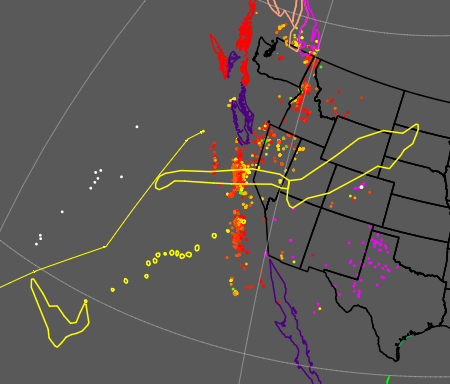
The Colorado mineral belt is a Precambrian lineament with scarce reactivation before 40 Ma. In this image at 78 Ma all the dots in Colorado are older than 90 Ma
Thought for 17s
The image at 78 Ma shows only older points in Colorado, which undercuts the usual claim that the Colorado Mineral Belt is the magmatic expression of the Shatsky conjugate passing at ~75 Ma.Thought
Your 78 Ma frame is consistent with the geology. The Colorado Mineral Belt is a Precambrian lineament (Proterozoic shear zones), and the Laramide plutons along it are a later reactivation, not a new volcanic track created by the passing Shatsky conjugate.
The belt follows northeast-trending Mesoproterozoic shear zones that have been weak zones since ~1.4 Ga. Phanerozoic reactivation is documented, but it is minor until the Laramide. Published ages for the intrusive centers that define the belt fall into three groups: Laramide (~75–43 Ma), middle Tertiary (~43–18 Ma), and late Cenozoic. A few stocks near the ends are dated ~75 Ma (Jamestown) and ~70–72 Ma (Carrizo, Ute), and activity is described as beginning around 75 Ma, but there is no continuous, well-dated sweep that tracks a subducting plateau at that exact moment. Much of the economically important mineralization is middle Tertiary.Pubs.geoscienceworld
In your NAVDAT reconstruction at 78 Ma the Colorado points are all older than 90 Ma. That means any ~75–70 Ma CMB centers are either:
- not present in the subset of NAVDAT you loaded,
- younger than the reconstruction time (so they have not yet appeared), or
- sparse enough that they do not form a visible cluster.
Either way, the image does not show a new volcanic signal lighting up along the belt at the time the Shatsky conjugate is supposed to be passing. The lineament was already there; the Laramide magmatism, where it exists, is reactivation of an old weakness rather than the direct surface expression of lithosphere ripping and asthenospheric intrusion under the southwestern U.S.
This reinforces the earlier point. Even the one feature sometimes offered as the magmatic fingerprint of the Shatsky conjugate (the Colorado Mineral Belt) does not appear as a clear, contemporaneous volcanic response in the continental igneous record you are viewing. The structural and underplating arguments can still be made, but they are not matched by a visible NAVDAT signal at 78 Ma.
The image at 78 Ma shows only older points in Colorado, which undercuts the usual claim that the Colorado Mineral Belt is the magmatic expression of the Shatsky conjugate passing at ~75 Ma.Thought
Your 78 Ma frame is consistent with the geology. The Colorado Mineral Belt is a Precambrian lineament (Proterozoic shear zones), and the Laramide plutons along it are a later reactivation, not a new volcanic track created by the passing Shatsky conjugate.
The belt follows northeast-trending Mesoproterozoic shear zones that have been weak zones since ~1.4 Ga. Phanerozoic reactivation is documented, but it is minor until the Laramide. Published ages for the intrusive centers that define the belt fall into three groups: Laramide (~75–43 Ma), middle Tertiary (~43–18 Ma), and late Cenozoic. A few stocks near the ends are dated ~75 Ma (Jamestown) and ~70–72 Ma (Carrizo, Ute), and activity is described as beginning around 75 Ma, but there is no continuous, well-dated sweep that tracks a subducting plateau at that exact moment. Much of the economically important mineralization is middle Tertiary.Pubs.geoscienceworld
In your NAVDAT reconstruction at 78 Ma the Colorado points are all older than 90 Ma. That means any ~75–70 Ma CMB centers are either:
- not present in the subset of NAVDAT you loaded,
- younger than the reconstruction time (so they have not yet appeared), or
- sparse enough that they do not form a visible cluster.
Either way, the image does not show a new volcanic signal lighting up along the belt at the time the Shatsky conjugate is supposed to be passing. The lineament was already there; the Laramide magmatism, where it exists, is reactivation of an old weakness rather than the direct surface expression of lithosphere ripping and asthenospheric intrusion under the southwestern U.S.
This reinforces the earlier point. Even the one feature sometimes offered as the magmatic fingerprint of the Shatsky conjugate (the Colorado Mineral Belt) does not appear as a clear, contemporaneous volcanic response in the continental igneous record you are viewing. The structural and underplating arguments can still be made, but they are not matched by a visible NAVDAT signal at 78 Ma.