What is it with squares in nature anyway?

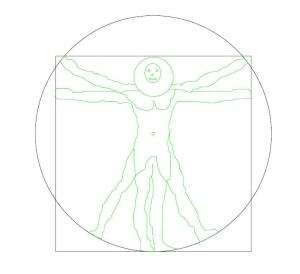
Homo ad Quadratum

Homo ad Quadratum

Actually, perfect squares are extremely rare in nature. Squares are human constructs.

We imagine Pythagoras and the Greek philosophers drawing their squares in the sand, dividing the sides equally, connecting the divisions, and counting the resulting smaller squares to develop the concept of a number multiplied by itself. The concept is probably much older. Both the Babylonians and the Egyptians had methods for calculating volume based on squared empirical approximations of Pi.

It is easy to imagine our forebears drawing a square around a circle to get the notion that the area of the circle varied with the radius squared. If that were the end of it one could dismiss it as the artifact of a practical approach, but these squares keep coming back.

Newton’s laws of gravitation vary the square of distance. Gravity? We’re a long way from geometric lines in the sand now.

E=MCsquared is Einstein’s formula for the relationship (relativity) of mass and energy. The speed of light squared?

Yagahhdabekiddnme! Why not the cube root or something…

Posted in Anthropology, History, What's going on here? | 2 Comments

Spreadsheet of Human History

Spreadsheet of human history

Spreadsheets are really graphs. This one has time on one axis and space on the other. The space geography is arbitrary but intended to sequence human dispersion from Africa.

I have lots of Teaching Company timelines and felt a yearning to tie them together. For instance, before this exercise I had no idea that while Charlemagne was being crowned Holy Roman Emperor; al-Khwarizmi was doing his algorithms in Persia, the Khmer were taking hold in Thailand, the stone heads were being erected on Easter Island, and the Anasazi were colonizing the Grand Canyon!

Certainly lots more can be done. Hot links would be good.

Posted in Anthropology, Climate, Geography, History, History of Life, Religion | Leave a comment

Explaining Milankovitch to a Barmaid.

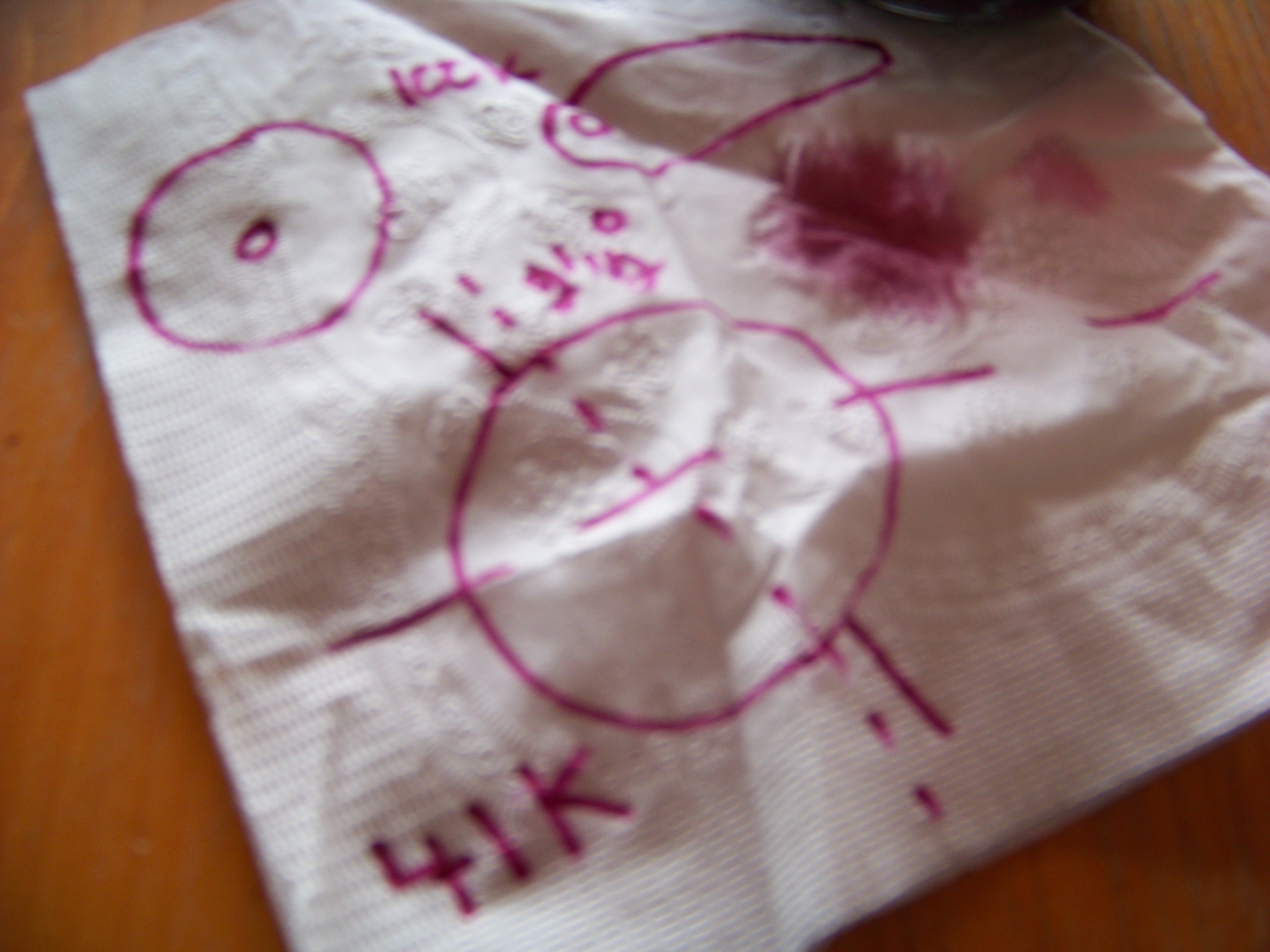
I had been drinking. And thinking, and remembering Einstein once said no scientific theory was any good unless you could explain it to a barmaid. Well, Albert, good luck with special relativity on a napkin, but Milankovitch?

A barmaid brought me another glass and it was slow and she was bored. “What do you know about Milankovitch?” I queried.

“Mawho?”

“The guy who proposed that the earth’s wobble caused the ice ages,” I suggested.

“Burrr.” She looked around as to see if someone had left a door open, but it was really, really slow.

“Ok, so tell me about this Milanko guy,” she grudgingly offered.

I drew eccentricity on my napkin.


“The earth’s orbit around the sun changes from this to that every hundred thousand years.”

“Why?”

“The gravitational attraction of Uranus…” She shot me a piercingly suspicious look. “And Jupiter and Saturn,” I quickly added.

“Reelee, do you ever have any fun?”

“Of course,” I parried, “but this is really important and Einstein said if it was any good I should be able to explain it to you.”

“Einstein?”

I drew the variation in obliquity.


“Why is the earth tipped?”

“Because it rotates around the sun leaning like the guys leaving here at closing time. And it wobbles like them too.”

“Ahguuh, you’re crazy.”

“No, 2 ½ degrees is like from San Francisco to Mendocino, or the straight up summer sun moving from Havana to Miami.”

“You’re crazy and you’re a nerd!”

“Or you could think of it as summer arriving 19 days early and leaving 19 days later.”

Now I was faced with explaining precession. Napkin would be no help. It’s not like I was going to say, “The earth’s spin has phase relative to its orbit around the sun so that sometimes winter and other times summer is closest to the sun.”

The clock read 3:42 PM and the first regular walked in. The barmaid was visibly relieved. I knew that I had failed to explain it and those Milankovitch theories were no good.

Posted in Anthropology, Climate, Climate Change | Tagged , , , | Leave a comment

An exceptional walk across the Golden Gate Bridge

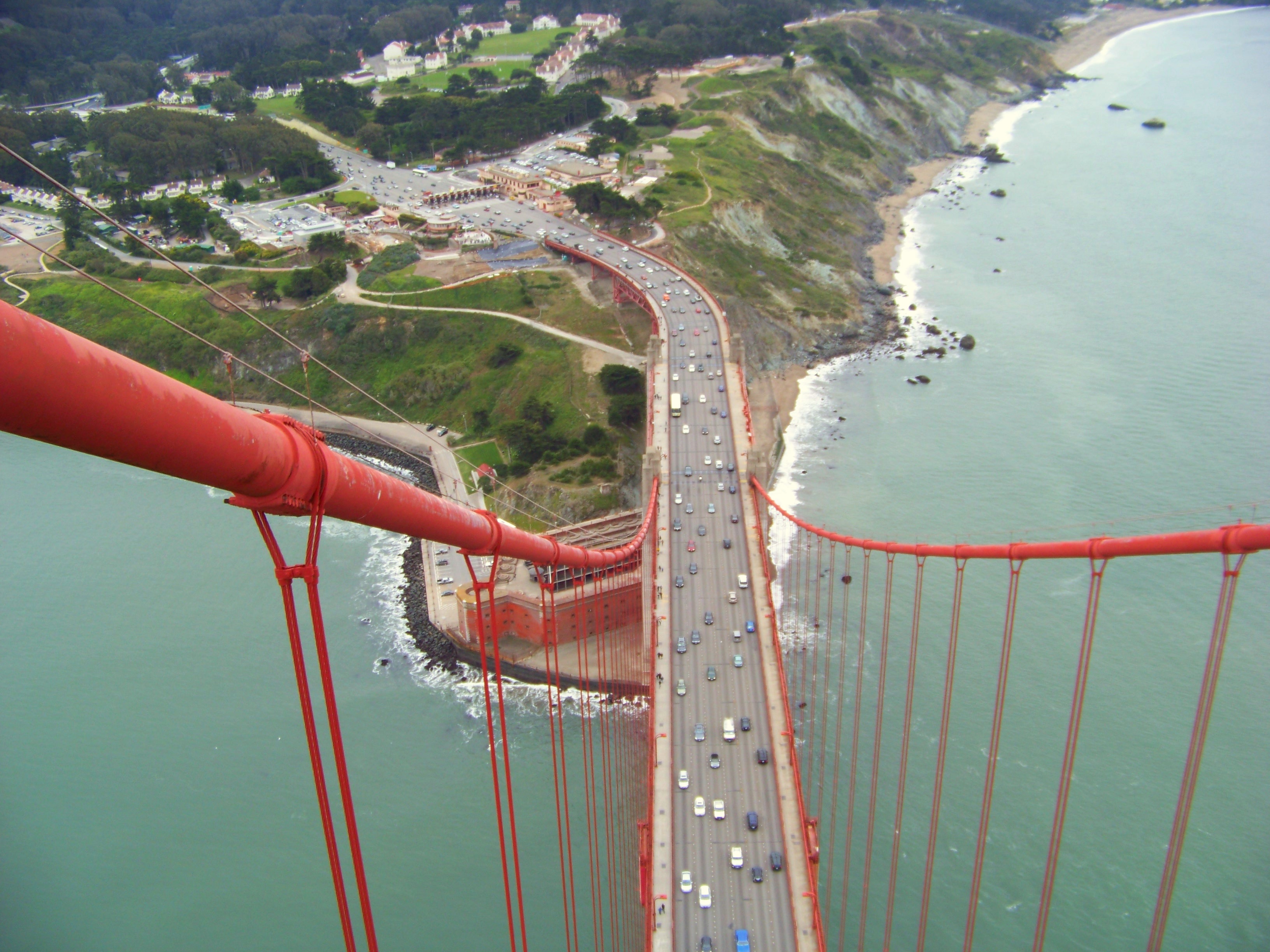
An exceptional walk required exceptional procedures. Picture ID, affidavit signed and cosigned, hard hats issued.

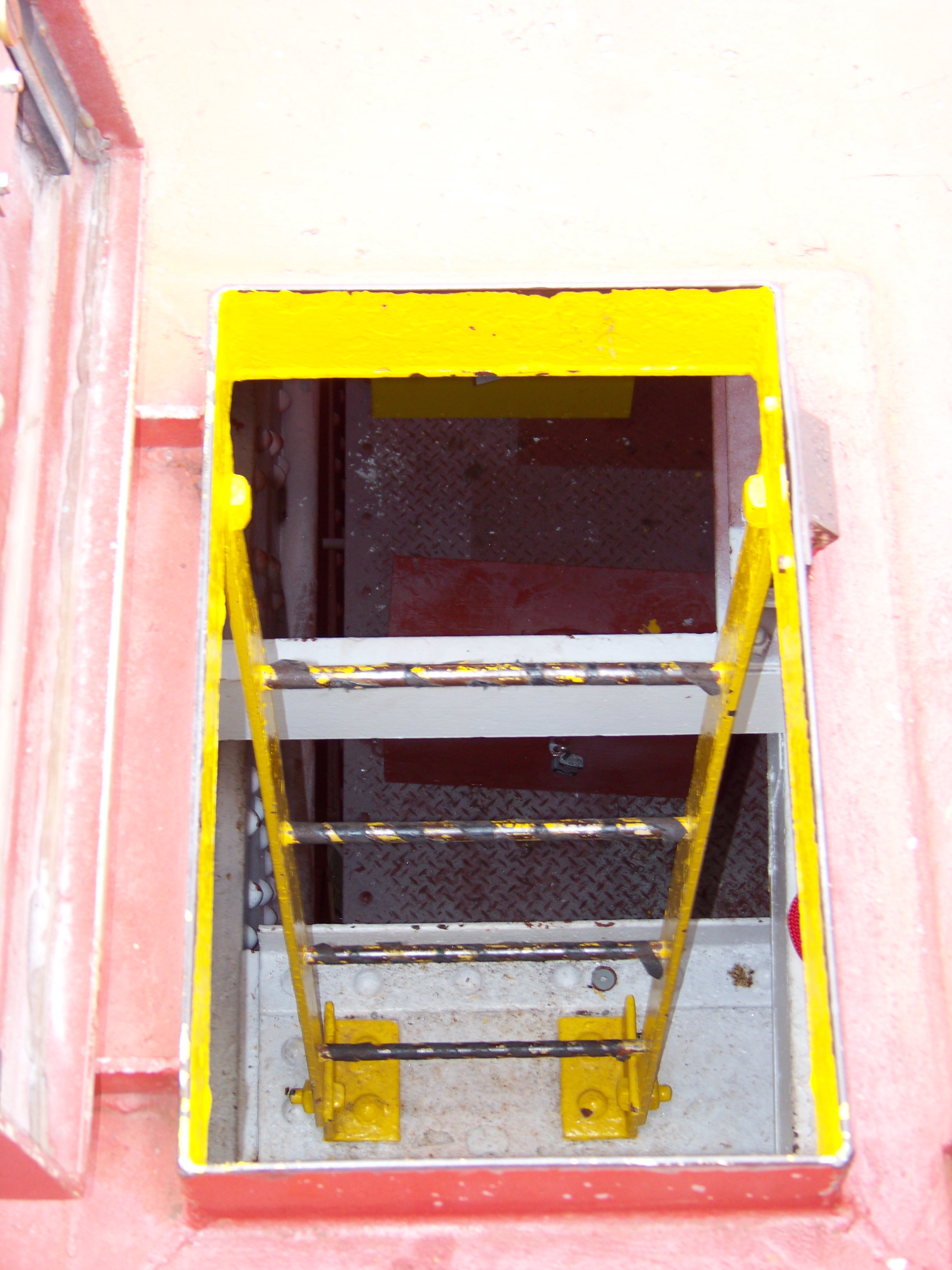
Ancient key inserted, old bolts grudgingly lifted, a tiny passageway to the innards of the south tower.

Three human sardines at a time, an elevator so tiny rivets passed an inch from your nose. A dark ladder fifteen feet to a landing and this final few rungs out the portal to the top.

Relief! No exposed pitches in the howling wind. You could have a luncheon up here.

Elation, nerves settled, slightly bummed to be forbidden the last exposed pitch up the ladder to the light even though it was pretty much what my imagination had feared.

An hour, lots of ships

Retrospective.

Posted in Geography | Tagged | 1 Comment

Skepticism

You know what skepticism is? Skepticism is doing yoga in your socks because it is cold and you didn’t start the fire soon enough. You know darned well it will be fine, you’ve even done it before when it was cold but it is against the rules.

Skepticism is driving without a seatbelt because it’s liberating and you are feeling it. You’re on it and you know in your bones you can steer around anything right now. You can remember when cars didn’t even have friggin’ seatbelts.

It’s leaving your shirt tail out or your shoelace untied for a bit just to see what happens. And because it’s not cool.

It’s farting in church and trying to look enraptured.

Skepticism is really the opposite of religion.

Posted in Anthropology, Climate, Religion | Tagged , , , | Leave a comment

Please Don’t Feed the Feedbacks

Feedback is central to the alarmist narrative on several levels. Negative feedback seven times more powerful for CO2 loss (from pre-industrial level, it is non-linear) than positive feedback for an equal gain is critical for the hypothesis that Milankovitch cycles explain why without exception temperature moves before CO2 in the ice cores. This may be why exceptionally powerful negative feedback parameters are built into the models.

Three hundred ninety-two point seven eight sounds like a lot of CO2 until you get to the parts per million, so let’s scale it back to something more humanly comprehensible: 39.28 per hundred thousand, 3.9 per ten thousand. Now we are getting to the scale of small towns and impressive gatherings.

Imagine ten thousand people marching up the Capital Mall. Imagine these to be all the atoms and molecules in the atmosphere. Four of them would be CO2. Ok, let’s round it up to 5 to account for the other “well mixed non-condensing” greenhouse gasses. It’s going to take some serious feedback for these five souls to control that crowd.

They do have disproportionate feedback. Water, the condensing and most powerful greenhouse gas is also found as a liquid and a solid in the atmosphere, but it is concentrated in the lower atmosphere. By mixing to high altitude CO2 is able to become a legitimate greenhouse agent, to the best of our follow the photon understanding of the greenhouse effect.

But there are only five of them in that crowd.

I was astonished so few reacted when Andrew Lacis posted the following on the NASA website in October 2010:

CO2 Removed

He did a model run with the non-condensing gasses entirely removed from a pre-industrial (only four at the march) level. The model responded with a global temperature drop of 4.6C the first year!

What an insult! Our collective human efforts since the industrial revolution digging carbon from the ground as well as prior and ongoing deforestation for fuel have been able to muster less than a 1 degree rise in global temperature according to the model. And this computer thinks it can take four guys out of a ten thousand man march and drop temperature that fast? Somebody, kick that thing!

Don’t believe anyone who says they know what global mean average temperature was during the glacial maxima. We really don’t know what it is today. But 4.6 degrees cooling is in the range of a glacial maximum. And it gets worse fast. In a decade the model would have more than 20 degrees cooling.

Try to imagine cooling at this rate in pre-industrial London. Within hours people would be running for shelter and lighting coal in their fireplaces. Within a month they would be ice skating on the Thames, even if it happened to be summer.

I think those feedbacks are way overfed.

Posted in Climate, Climate Change, Geography, Global Warming, Paleoclimate | Tagged , , , , , , , | Leave a comment

Reblogg

I’d actually written this as a reply on Dr. Roy Spencer’s Blog but there seemed some sort of enfarction and the beauty of having your own is I can just post it here…

“And I still think a photon emitted by a cool object can be absorbed by a warmer object but the greater flux in the opposite direction means that the warm object heats the cool object anyway. But I wasn’t going to go there.”

Luv it. We Jacks of all trades gotta stick together.When you don’t understand something, all you have is statistics.

I mean really, you think a photon really CARES? Or you think the higher Pauling vibrational state of the warmer body actually repels the photon?

Well, I don’t know either, but this is the state of our understanding of the greenhouse effect in our atmosphere.

Posted in Climate | Tagged , , , | 1 Comment

Too Much on my Plate

I’ve been getting annoyed with the grade school conception of “plate” tectonics where everyone is identifying plates and their relative motions and saying stuff like the Japan Earthquake of 2011 was caused by the Pacific Plate sliding under Japan. It is as if the plates had their own means of locomotion and it ignores the fundamental difference between oceanic and continental “plates”.

The plates are just so much china, if you can indulge me here, and what is really interesting is the spreading centers that push ocean floor and the subduction zones or trenches that may actually draw ocean floor down down.

I recently was sent thus utube of the Japan Earthquakes of 2011.

The earthquake pattern before the major event was what one might expect from a plate sliding under another plate: widely dispersed random events. Beginning with the major event virtually all activity was focused where the Japan Trench meets the Ryukyu Trench and all other activity on both trenches virtually ceased.

Unhappily for Japan, it sits astride this juncture.

Posted in Geography, Geology, Oceanography | Tagged , , , , , , | Leave a comment

Deeper Doo Doo for Dendrochronology

Indices of the Pacific Decadal Oscillation are in close agreement for the period of the last seventy years. The NASA Multivariate Index and the Mantua Index only go back a hundred or so and they correlate very closely. These shorter indices correlate pretty well with the longer Shen Index based on rainfall records in China, which goes back to 1470. The longest index based on Limber Pine tree rings by MacDonald and Case goes back a thousand years, but differs significantly.

Long term PDO Indices Compared by https://geosciencebigpicture.com/wp-content/uploads/2012/02/long-term-pdo-indices-compared.jpg is licensed under a Creative Commons Attribution-NonCommercial-ShareAlike 3.0 Unported License.Based on a work at geosciencebigpicture.files.wordpress.com.

That these two match so well for the last hundred years after squabbling for the prior four hundred is notable. Actually there is reasonable agreement for about a three hundred year flat period with only the tree rings getting all excited now and then. The only major movements they agree on are the run up in the late 1400’s and the “hockey stick” of the instrumental era.

Posted in Climate, Climate Change, Geography, Oceanography, Paleoclimate, Paleogeography | Tagged , , , , , , | 3 Comments

What’s going on here? #…oh who’s counting

More data follies. Had to respond to a tenant complaining of poor retail sales. Took a notion to check retail sales for the area. Guess the rainfall data follies should have prepared me. But no, naive I guess, too ready to trust in essential goodness. Three hours later I still had no data unhidden by a paywall.

On one hand I can appreciate that few people these days are inclined to venture into raw data, on the other hand free information is essential to a free society. We are paying these guys! Reminds me of a Paul Simon line, “The information is unavailable to the common man.”

Posted in Economics, Geography | Leave a comment